
No products in the cart.
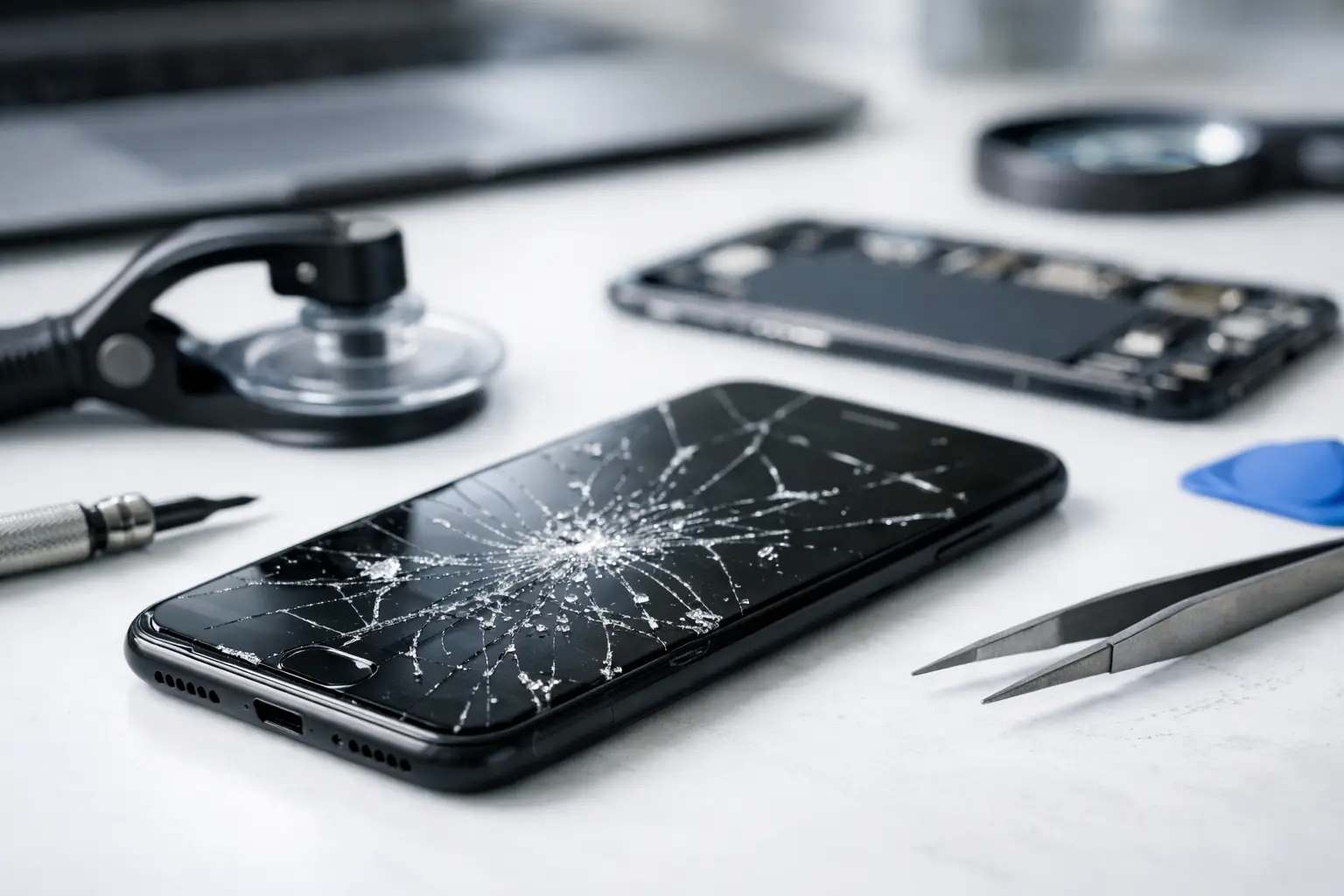
That spiderweb crack across your phone screen usually happens at the worst possible time – right before work, during a trip, or when you need directions, banking, or a two-factor code. When people search for the best fixes for shattered screens, they usually want one thing: the fastest way to make the device usable again without wasting money on the wrong repair.
The right fix depends on how bad the damage is. A tiny crack in the corner is very different from a screen that is black, flickering, cutting your finger, or randomly tapping apps on its own. Some shattered screens are mostly cosmetic. Others are a full device failure in progress.
The best fix is the one that restores safe, reliable use without creating more damage underneath. That sounds obvious, but plenty of people lose time and money by trying a shortcut when the phone really needs a full screen replacement.
If the glass is cracked but the display still looks normal, the touch works, and there are no black spots or colored lines, you may have a short window where a temporary fix helps you get by. If the screen has dead areas, ghost touches, ink-like blotches, green lines, or exposed glass shards, a professional replacement is usually the only smart move.
This is where trade-offs matter. A cheap patch may feel convenient today, but it can leave the phone vulnerable to moisture, pressure damage, and touch failure tomorrow. On the other hand, replacing a screen immediately on an older budget device is not always the best financial choice if the repair cost gets too close to the value of the phone.
There is a big difference between making a shattered screen safer for the next 24 to 72 hours and actually fixing it.
A screen protector can help hold loose glass in place and reduce the chance of cuts. Clear packing tape can do something similar in an emergency if you need the phone just long enough to back up photos, transfer data, or get through the day. These are short-term measures, not repairs. They do not restore structural strength, and they do not fix damage to the display layer underneath.
Liquid glass products are often marketed as a solution, but they are not the best fix for shattered screens that already have visible cracks. At best, they may add minor surface reinforcement. They will not reverse broken glass or repair dead pixels, touch issues, or OLED damage.
DIY glass-only kits also sound appealing because they cost less upfront. In reality, they are risky for most users. Modern phone screens are tightly bonded components. Separating shattered glass from the display without damaging the panel takes specialized tools, controlled heat, and experience. A repair that starts as a money-saving move can quickly turn into a full display replacement anyway.
Sometimes the damage looks worse than it is. If your phone has a few hairline cracks, the image is clear, brightness is normal, and touch response works across the whole screen, adding a tempered glass protector can be a reasonable stopgap.
This works best when the cracks are light, there are no missing pieces of glass, and you plan to replace the screen soon. The protector will not make the original glass whole again, but it can reduce spreading and make daily use less frustrating. It is a practical option if you need a few more days before booking a repair.
Still, there are limits. If the original glass is lifting, splintering, or already affecting touch accuracy, a protector may trap debris, fit poorly, or make the screen harder to use. In those cases, delaying repair usually makes the experience worse, not better.
For most serious damage, full screen replacement is the answer. That is especially true if your phone has any of the following problems: black spots, vertical lines, flickering, dim sections, unresponsive touch, face unlock issues caused by impact, or sharp glass edges.
A proper replacement restores both function and safety. It also protects the inside of the phone. Once the screen is shattered, the device is more exposed to dust, pocket lint, and moisture. Even a light splash that used to be no big deal can become a bigger problem when cracked glass has broken the phone’s seal.
Professional repair also tends to be faster than people expect. For common models, same-day service is often possible. That matters when your phone is your wallet, your calendar, your camera, and your work line all at once.
The quality of the replacement part matters too. Cheap aftermarket screens can look dull, drain the battery faster, or have weaker touch response. A repair done with genuine parts or high-quality tested components backed by a comprehensive warranty gives you a much better result and fewer repeat issues.
This is the question most people ask after the initial panic wears off. The answer depends on the age of the device, the repair cost, and whether there are other issues beyond the screen.
If your phone is relatively current, holds a charge well, and works fine otherwise, screen replacement is usually the better value. It gets you back to normal quickly and costs far less than buying a new phone.
If the phone already has battery problems, water exposure, frame bending, or motherboard issues, the math changes. A shattered screen plus hidden internal damage can turn one repair into several. In that case, a free diagnostic is the smart first step. You want to know whether you are paying for a straightforward screen job or chasing a larger problem.
For students, families, and small business users, the practical answer is usually the one that minimizes downtime. Fast repairs often beat the hassle of setting up a new device, recovering accounts, moving apps, and hoping everything transfers correctly.
First, stop pressing hard on the damaged area. Extra pressure can worsen cracks and damage the display beneath the glass. If there are loose shards, handle the phone carefully and keep it away from children.
Next, back up your data as soon as possible if the screen still responds. If touch is unreliable, avoid repeated force tapping. That can make things worse. If the display is still visible, use voice commands, a stylus with a soft tip, or careful input just long enough to save important files and photos.
Then protect the surface. A temporary cover such as a screen protector can help prevent cuts while you arrange repair. After that, get the device checked quickly. The longer a shattered screen stays in use, the more likely you are to see spreading cracks, touch failure, or moisture-related damage.
Not all screen repairs are equal, and the cheapest quote is not always the best deal. Ask whether the shop offers same-day service for your model, what kind of parts they use, and whether the repair includes a warranty. Clear answers matter.
You should also look for a shop that handles diagnostics upfront. A hard drop can affect more than the glass. Camera modules, charging alignment, frame shape, and battery connections can all be impacted. A technician who checks the full device helps you avoid surprises after the screen is replaced.
Trust matters when your whole life is on that device. A local repair team that explains the issue clearly, gives transparent pricing, and stands behind the work is usually the safest route. That is why many customers choose service centers like iFix Hub for fast repairs, genuine parts, and a comprehensive warranty instead of gambling on low-cost fixes that do not last.
Once the screen is repaired, it makes sense to protect that investment. A quality case with raised edges and a tempered glass protector are still the simplest ways to reduce repeat damage. If you tend to drop your phone getting in and out of the car, juggling groceries, or rushing through the day, the right accessories are cheaper than another screen replacement.
A shattered screen feels urgent because it is urgent. The best move is usually the simplest one: use a temporary cover only if the damage is minor and brief, then get a professional diagnosis before the problem spreads. The faster you deal with it, the better your chances of keeping the repair affordable, the data safe, and your day on track.


Need help? Our team is just a message away
One Response