
No products in the cart.
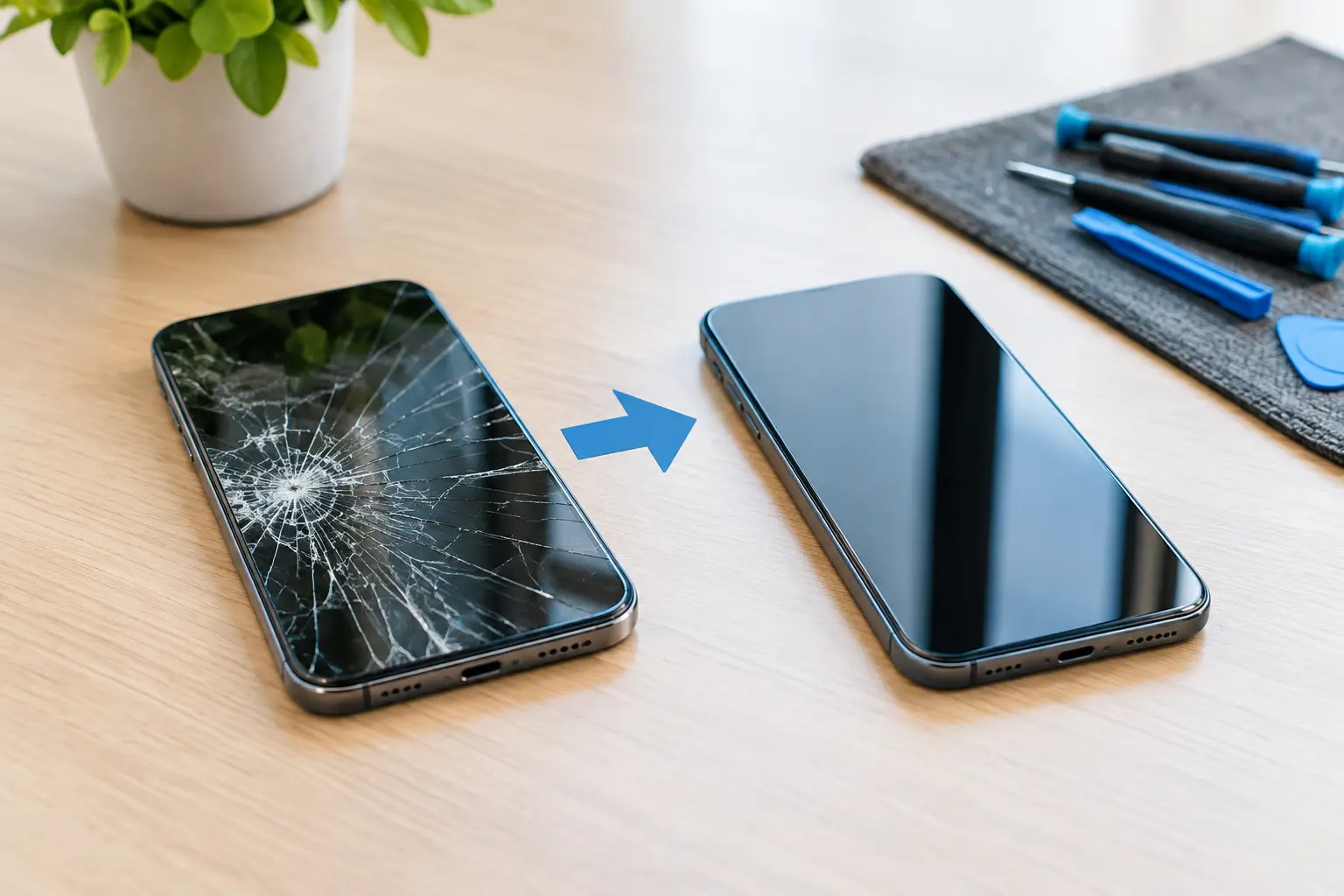
A phone can slip from a desk, hit the sidewalk, and leave you with a screen full of cracks in seconds. This cracked screen repair example shows what a professional repair visit can look like, what your technician checks first, and why replacing the glass is not always as simple as it appears.
Picture an iPhone that falls face-down from a kitchen counter. The front glass has several spiderweb cracks, a small piece is missing near the edge, and the display still turns on. Touch works most of the time, but typing near the bottom corner is inconsistent. The customer needs the phone for work, banking, messages, and navigation, so mailing it away or waiting several days is not a practical option.
At a professional repair shop, the first step is a free diagnostic check. A technician looks beyond the obvious cracks to test the display brightness, touch response, front camera, speaker, Face ID or fingerprint functions, charging, and frame condition. This matters because a hard drop can damage more than the top layer of glass.
In this example, the display has a faint green line along one side and touch input fails in a small area. That means a simple glass-only repair is not the right service. The complete screen assembly needs replacement. Replacing only the visible glass would leave the customer with the same touch problem and could put the device at greater risk of further damage.
A cracked display can range from a cosmetic issue to a device problem that needs immediate attention. The diagnostic process helps separate those situations and gives you a clearer, more accurate repair quote.
First, the technician confirms whether the phone powers on and holds a charge. Next, they test the touchscreen across the entire display, not just the center where most people tap. They also check for black spots, flickering, colored lines, dead pixels, dim areas, and screen lifting around the edges.
The phone’s frame is just as important. If the housing is bent after a drop, a new screen may not sit correctly until the frame issue is addressed. A damaged frame can create pressure points that cause a replacement display to crack again. In some cases, a case can hide that damage until the technician removes it.
Finally, the technician checks for signs of water exposure. Cracked glass weakens the phone’s protective seal, so moisture can enter more easily after the damage occurs. Even if the device was never dropped in water, carrying it in the rain, using it near a sink, or keeping it in a humid gym bag may become more of a concern once the screen is broken.
Once the customer approves the repair, the technician powers down the device and carefully opens it using the proper tools. This is where experience matters. Modern phones pack delicate cables, cameras, sensors, and batteries into a very tight space. Pulling a broken display off too quickly can damage parts that were working perfectly before the repair.
The cracked screen is removed, and any loose glass is cleaned away from the housing. The technician then inspects internal connectors and installs a compatible, high-quality replacement screen. On devices that support it, display functions and sensor components are transferred or calibrated as needed.
Before the phone is sealed, the technician tests the new display again. They check brightness, color, touch response, front camera operation, speaker performance, and biometric features. The device is then reassembled, cleaned, and given a final inspection.
For a standard screen replacement with no added damage, this type of repair can often be completed the same day. Timing depends on the phone model, part availability, and whether the diagnostic reveals additional issues. A newer flagship model or a device with frame damage may take longer, but a good repair shop should tell you that upfront rather than making promises it cannot keep.
Two phones with cracks may look similar, yet require very different repairs. Price is affected by the device model, screen technology, level of damage, and the quality of the replacement part.
An older LCD display generally costs less to replace than a newer OLED screen. OLED panels offer deeper blacks and vivid color, but they are more expensive components. Curved displays, foldable devices, tablets, and phones with advanced fingerprint sensors can also require more specialized parts and labor.
The biggest price difference often comes down to whether the damage is limited to the outer glass. If the display looks normal and touch works perfectly, a glass-only option may be available for certain models. If there are black blotches, ink-like bleeding, lines, flickering, or touch failures, a full display replacement is usually needed.
Low-cost repair quotes can be tempting, especially when you need your phone back quickly. But the cheapest screen is not always the best value. Poor-quality parts may have weak brightness, washed-out color, slow touch response, or a shorter lifespan. Ask what type of replacement screen will be used and whether the repair includes a comprehensive warranty.
You do not always have to replace a cracked screen the minute it breaks, but waiting has trade-offs. Small hairline cracks can spread with heat, pressure, and everyday handling. A damaged corner can turn into a sharp edge that cuts your finger or catches on clothing.
Fast repair is especially wise when the screen has exposed glass, black spots, display lines, touch issues, or a gap between the screen and frame. Those signs can indicate that the damage is moving beyond the surface. Backing up your data as soon as possible is also smart if the phone still works. A broken screen can become harder to use without warning.
Until you bring the device in, avoid pressing on the cracked area, keep it away from water, and do not rely on tape as a long-term solution. A screen protector may help hold tiny pieces in place temporarily, but it will not repair the display underneath.
A trustworthy repair experience should feel clear, not confusing. Ask whether the diagnostic is free, what part is being installed, how long the repair is expected to take, and what the warranty covers. You should also ask whether any functions may be affected by the repair, particularly on newer phones with advanced biometric or display features.
For the customer in this cracked screen repair example, the answer was straightforward: the full display assembly needed replacement, the repair could be completed the same day, and the phone would be tested before pickup. There were no surprise repairs added without approval.
That clarity is what turns an urgent device problem into a manageable one. At iFix Hub, certified technicians can assess the damage, explain the right fix in plain language, and help get your phone back in your hands fast with quality parts and warranty-backed service.
A cracked screen should not force you to put work, school, travel, or family plans on hold. Get a proper diagnosis before the damage spreads, then choose a repair that protects both your device and your time.



Need help? Our team is just a message away