
No products in the cart.
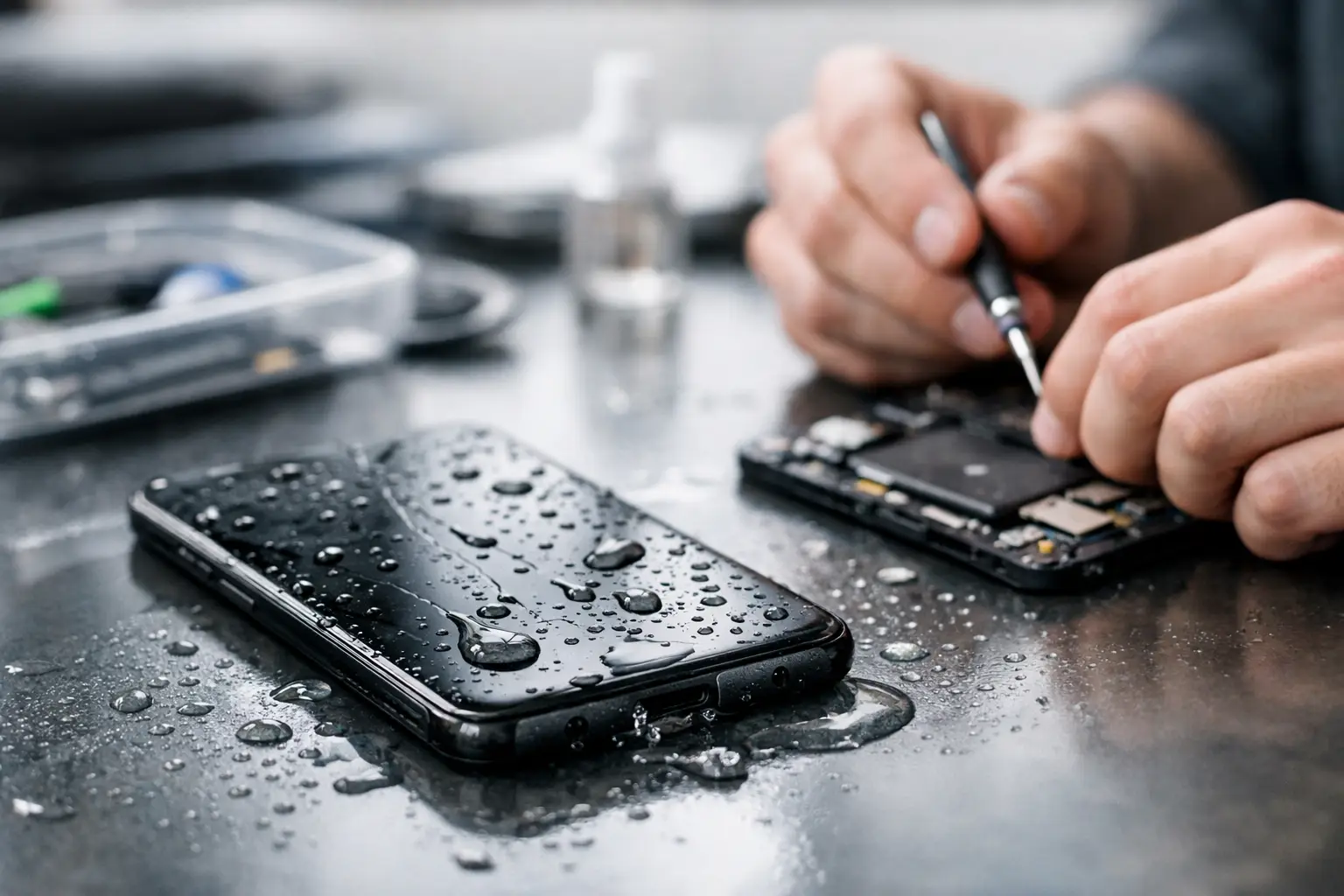
A phone slips into a sink, pool, washing machine, or cup of coffee, and suddenly every second feels expensive. The good news is that phone water damage repair can sometimes save both the device and the data, but the first few minutes matter more than most people realize.
Water damage is rarely a simple yes-or-no problem. Some phones recover with quick professional cleaning and part replacement. Others may power on at first, then fail days later because corrosion keeps spreading inside. That is why fast action, a proper diagnosis, and same-day service can make a real difference.
If your phone gets wet, turn it off immediately if it is still on. Do not keep checking the screen, testing the buttons, or plugging it in to see if it still charges. Electricity and moisture are a bad combination, and trying to use the device can turn a repairable issue into board-level damage.
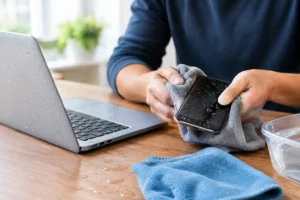
Remove the case, take out the SIM card tray if possible, and gently dry the outside with a clean cloth. If the phone has a removable battery, take it out. Most newer phones do not, which is one reason professional inspection matters. Moisture often gets trapped around the charging port, speakers, camera housing, and internal connectors even when the outside looks dry.
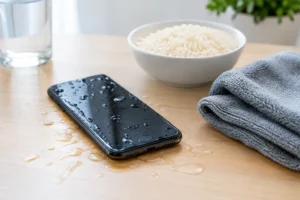
A lot of people reach for a bag of rice. It feels like doing something useful, but rice is not a reliable fix. It does not properly remove liquid from inside the phone, and waiting too long can give corrosion time to spread. The better move is to keep the phone powered off and get a free diagnostic from a repair shop that handles water-damaged devices every day.
The problem is not just the water you can see. Once liquid enters the phone, it can affect the battery connection, display, charging system, cameras, microphones, and motherboard. Even clean water can leave behind minerals. Salt water, soap water, coffee, soda, or other liquids can be much worse because they leave residue and increase corrosion risk.
This is why one wet phone may only need cleaning and a charging port repair, while another may need a screen replacement, battery replacement, or data recovery. It depends on what liquid got inside, how long it stayed there, whether the phone was powered on, and how quickly it reached a technician.
Water-resistant phones can also be misleading. Water resistance is not the same as waterproof. Seals wear down over time, previous repairs can affect the original protection, and exposure to pressure, heat, or certain liquids can still cause internal damage. If your phone got wet and starts acting strangely, do not assume the rating will protect it.
Some water-damaged phones fail right away. Others show subtle symptoms first. If you notice flickering, ghost touch, muffled audio, charging problems, overheating, fog inside the camera lens, random restarts, or no network signal, moisture may still be affecting internal parts.
Delayed symptoms are common. A phone may seem fine for a day, then stop charging or lose display function later. That is one reason phone water damage repair should happen as soon as possible, even if the device still turns on. Corrosion does not wait.
Professional technicians usually inspect the phone internally, clean residue, test core functions, and identify which parts are still good. That kind of diagnosis saves time and money because you are not guessing. You get a clear answer on whether the issue is limited to one part or whether the logic board is involved.
A quality repair shop will not promise miracles before opening the device. Water damage is one of those repairs where honesty matters. Sometimes the fix is straightforward. Sometimes the damage is deep enough that saving the phone is not cost-effective, but saving the data still might be.
A proper service typically starts with a diagnostic and internal inspection. Technicians look for residue, corrosion, damaged connectors, and shorted components. From there, they clean the device, test affected parts, and recommend only what is necessary. That might mean replacing the battery, charging port, screen, camera, or other damaged components.
The biggest advantage of fast in-person service is speed. Same-day service is often possible for common issues, especially if the damage is caught early and replacement parts are available. For customers who rely on their phones for work, school, travel, or family communication, that turnaround matters.
Just as important, a trusted repair shop uses genuine parts when available, explains the repair clearly, and backs the work with a comprehensive warranty. That gives you a better option than rolling the dice with a cheap fix that may not last.
It depends on the phone, the extent of damage, and what matters most to you. If you have a newer device, important photos, work apps, or two-factor authentication tied to that phone, repair is often worth attempting. Even when full device recovery is uncertain, data recovery can still provide real value.
For an older phone with severe board damage, replacement may make more financial sense. A good repair shop will tell you that directly instead of pushing unnecessary work. Transparent pricing matters here. You want to know whether you are paying for a realistic repair, a best-effort restoration, or just a diagnostic to confirm the next step.
That practical approach is why many customers choose neighborhood repair specialists instead of waiting on manufacturer channels. You get fast repairs, a real conversation about the options, and a chance to save the phone without long delays or premium pricing.
Not every repair store handles water damage well. This type of job requires careful diagnostics, not just part swapping. Look for a shop that offers free diagnostics, certified technicians, clear repair timelines, and strong customer reviews. If they also handle data recovery, that is a good sign they understand urgent cases.
Ask whether they offer same-day service when possible, whether they use genuine parts, and whether the repair comes with a comprehensive warranty. Those details matter because water damage can affect more than one system, and you want a repair partner who will stand behind the work.
It also helps to choose a shop that can handle related issues in one visit. A wet phone might need a charging port repair today, a battery replacement tomorrow, or a new case and screen protector after the repair is complete. Convenience matters when your device is central to your day.
At iFix Hub, the focus is simple: fast repairs, affordable pricing, certified technicians, and straightforward service that gets you back up and running without the usual hassle.
A few common mistakes cause extra damage. Do not charge the phone. Do not press buttons repeatedly. Do not use a hair dryer, oven, or microwave. Heat can damage internal components and push moisture deeper into the device. Do not shake the phone aggressively either, since that can spread liquid to areas that were not affected yet.
Also, do not wait several days hoping it fixes itself. Time is not your friend with liquid damage. The sooner the phone is opened, inspected, and cleaned, the better the chance of a successful repair.
Once your phone is working again, prevention is cheaper than another emergency. A quality case helps with drops, and some models add a bit of daily splash protection. If you spend time around water, consider a waterproof pouch for travel, boating, beach days, or pool use.
Charging habits matter too. Moisture often enters through exposed ports, especially in bathrooms, kitchens, and outdoor settings. Keep the phone away from sinks and wet countertops, and do not charge it in damp environments. If your device has already had water exposure once, taking a few basic precautions can save you another urgent repair bill.
If your phone got wet, the smartest move is simple: power it off, stop testing it, and get it checked right away. A fast diagnosis can mean the difference between a routine repair and a total loss, and when your phone holds your work, messages, photos, and daily essentials, that time matters.


Need help? Our team is just a message away